Today’s first for the “one new thing a day for 100 days” new years resolution was to ride my bike up to the road closure and check out the ‘mudslide’ from the storms earlier this month. HOLY GUACAMOLE. I had no idea how horrible the conditions were.. the pictures online did not do the damage justice!
*this is located on Old San Jose Rd, about 5.1 miles up the road from downtown Soquel, CA.
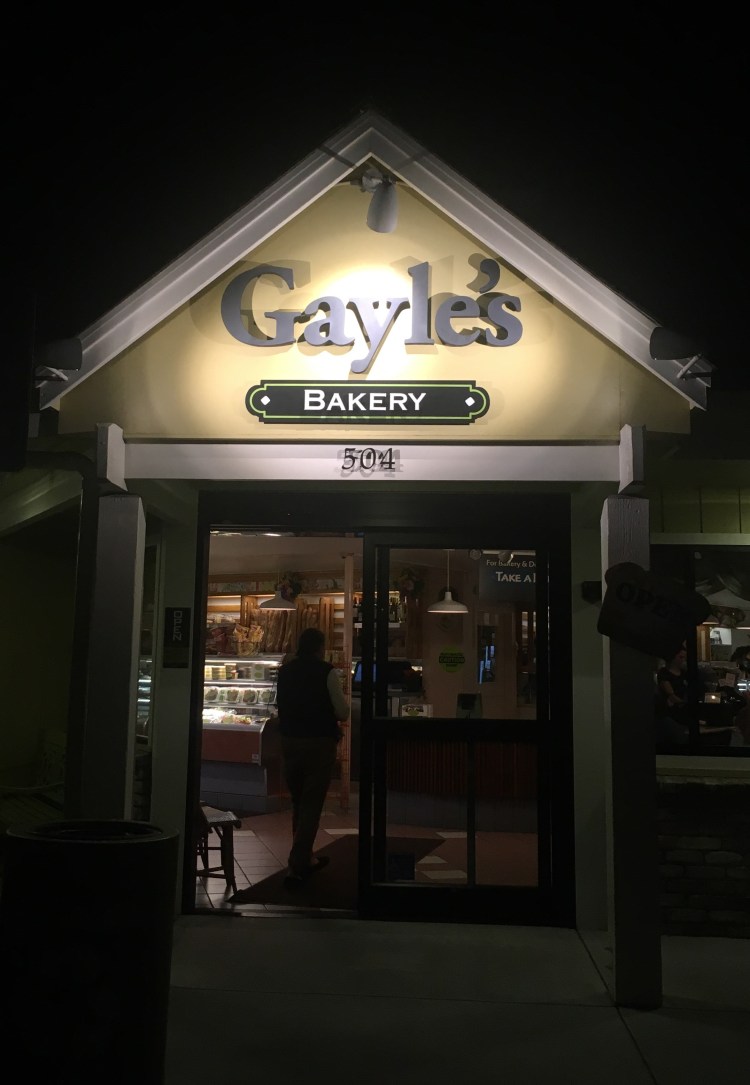
Today’s first for the ‘one new thing a day for 100 days’ new years resolution was a sweet one, pun fully intended. I have driven by this bakery over 20 times, it was about time I got my tush in the door! Boy am I glad I did…I splurged on a Marionberry Turnover. YUM-my.
Marionberry= The marionberry is a vigorously growing trailing vine, usually producing just a few canes up to 20 feet long. The vines have many large spines, and the fruiting laterals are long and strong, producing many berries. The berry is glossy and, as with many blackberries, appears black on the plant, but turns a deep, dark purple when frozen and thawed. It is medium in size and tends to be conical, longer than it is wide. The berry has a somewhat tart flavor, fairly earthy with traces of sweetness. It is larger, sweeter and juicier than the ‘Evergreen’ blackberry. The relative complexity of its flavor has led to a marketing label as the “Cabernet of Blackberries”. The more powerful flavor of the marionberry has led to it dominating current blackberry production. It is often preferred over other blackberries as an ingredient in pies, ice cream, jellies, jams and other foods
Julia, pictured below, has worked at Gayle’s since she was 16.. now is 26, studying to become an archeologist.
Today’s first for the “one new thing a day for 100 days” new years resolution was to take 5 extra minutes during an early morning ride to softly approach these pretty ponies I have cycled by 3 times now. The friendly encounter inspired me to read a bit more on ponies and after a long day (just home from work at 9:30pm!) here I am learning about the difference between ponies and horses (see below if interested). (** On a side note, every time I think I’m crazy for attempting this New Year’s Resolution, I am reminded of how awesome it is to commit to, and follow through with, an idea. My goodness with a little planning we can fit so much into these gifts we call days – there is endless magic out there to explore and learn about. My hope is to share with others how wonderful it is to expand our horizons to new experiences, to take a step off our own beaten path and see what is around the corner…)
WIKIPEDIA: Pony
A pony is a small horse. Depending on context, a pony may be a horse that is under an approximate or exact height at the withers or a small horse with a specific conformation and temperament. There are many different breeds. Compared to other horses, ponies often exhibit thicker manes, tails and overall coat, as well as proportionally shorter legs, wider barrels, heavier bone, thicker necks, and shorter heads with broader foreheads. The word pony derives from the old French poulenet, meaning foal, a young, immature horse, but this is not the modern meaning; unlike a horse foal, a pony remains small when fully grown. However, on occasion, people who are unfamiliar with horses may confuse an adult pony with a foal.The truth, though, is that ponies and horses are not two stages of development of a single animal. They’re actually different, although related and quite similar, creatures. Ponies remain small when they’re fully grown.
All types of horses are known as equines. Equine experts measure the height of animals in units of measurement called hands. A hand is approximately four inches, which is an average width of a human hand.
The main distinction between ponies and horses is height. A horse is usually considered to be an equine that’s at least 14.2 (or about four feet ten inches) tall. A pony, on the other hand (pun totally intended!), is an equine less than 14.2 hands.
This is not a black and white rule, though. There are horses less than 14.2 hands tall, and there are ponies that are taller than 14.2 hands. Why? The answer is that ponies and horses are different in
Pony breeds, in addition to being shorter than horses, have other characteristics that make them different from horse breeds. Ponies and horses have different conformations. This means that they have differences in their bone structures, muscles and overall body proportions.
For example, ponies tend to be stocky and stronger (for their size) than horses. They are more tolerant of cold weather and have good endurance, which makes them good work horses. Ponies also tend to be very intelligent. From a human point of view, this means that ponies might be more stubborn than a horse.
Physically, ponies usually have thicker manes and coats that help protect them from the cold. They have shorter legs and wider chests, as well as heavier bones, thicker necks and shorter heads.
Likewise, there are horse breeds that don’t grow taller than 14.2 hands, yet don’t share the same characteristics of ponies. Examples of these breeds include Caspian, American, American Miniature, Morgan and Icelandic horses. Despite their shorter stature, these equines are considered horses because they are quite different from ponies.
Today’s first for the “one new thing a day for 100 days” new years resolution was to take a free U.S. Citizenship practice exam. I have always been curious about the level of difficulty of these tests. Two out of the 10 questions I had to think twice, but managed to still get a perfect score. I guess I paid enough attention in my U.S. History and Social Studies classes!
Today’s first for the “one new thing a day for 100 days” new years resolution was to take an intro flight lesson at ATP flight school in Hayward, CA. The weather conditions were ideal, a little chop here and there, but clear skies otherwise. My instructor, Rich, was wonderful.
Flying over the golden gate bridge (which I used to commute across frequently on my bicycle) was beyond magical. The aerial view makes me feel beautifully insignificant and yet so connected at the same time. When else have I ever been able to soak in the Bay Area and its 7.65 million inhabitants all at once!?
The experience certainly helped get the career change bee out of my bonnet. While becoming an Airline Pilot is clearly an amazing, challenging, and rewarding path, I was reminded that my current role in the health and wellness field is where I am meant to be. I imagine every human at some point asks themselves “my goodness what am I doing with this ONE precious life”?! My humble advice to help answer that (perhaps) anxiety provoking question is to take a tangible step in a certain direction! Fly the plane, shadow the doctor, audit the grad school class, take a cooking class… we are so fortunate in this country to have tons of opportunity to get a taste of something before fully investing our time and money in it…walking the talk will result in more clarity when it comes to making a decision. The heart may not say many words, but its message is always loud and clear. The real question is do we have the courage to LISTEN?
Today solidified my belief that flying through the sky for a job would be epic, hands down, but it also assured me that my passion for contributing work to this world is to have those two hands helping people heal! As for a hobby, heck yes, I will start saving up to one day get my PPL (private pilot’s license) ;). More info on ATP below these next pics..
Airline Training Program
ATP is your airline career solution from zero time to airline pilot in about two years – proven by thousands of graduates now flying for regional and major airlines.
Private thru Commercial Multi with CFIs
Airline-Oriented Training from Day One
Fixed Cost in the Shortest Time Frame
Pilot Recruiting Events During Training
Guaranteed Instructor Jobs to Reach Airline Minimums Earning up to $42,000 annually with airline tuition reimbursement
At Least $11,000 in Airline Sponsored Tuition Reimbursement
1.
With airline-oriented, total immersion training from day one, you will graduate from the Airline Career Pilot Program in 9 months (from zero time), earning your Commercial Multi-Engine pilot certificate with Certified Flight Instructor certificates.
2.
After graduating the program, you receive a guaranteed Flight Instructor job with ATP, where you can earn up to $42,000 annually with airline tuition reimbursement and gain the necessary flight experience to reach airline hiring minimums of 1500 hours.
3.
During your time as a flight instructor, at 500 hours total flight time, you can begin earning at least $11,000 in airline sponsored tuition reimbursement, if qualified.
4.
After approximately 18 months as a flight instructor, you will be at airline minimums and ready to take the next step in your professional pilot career.
Today’s first for the “one new thing a day for 100 days” new year’s resolution was to use the Krankcycle at the gym. When it comes to movement, I tend towards outdoors and functional exercise as much as possible, but it is always beneficial to diversify and take advantage of well designed equipment. While upper body rotational exercising is not a new idea- the first arm rotational cranking machine was patented 73 yrs ago – the krankcycle itself was more recently invented by the founder of Spinning. It offers the unique combination of upper body strengthening and cardio vascular exercise.
It took a couple of minutes to find the right resistance that allowed me to get into the groove, but once I did it was pretty fun.. not to mention challenging!
Today’s first for the “one new thing a day for 100 days” new years res was to see Monophonic’s perform at Moe’s Alley. www.monophonics.com good stuff
Touching on Northern soul, doo-wop, rock and roll, Psych pop, and cinematic music, Monophonics show off their diversity while remaining true to their roots. Overall it’s heartfelt music and old school vibes, without losing sight of the present.
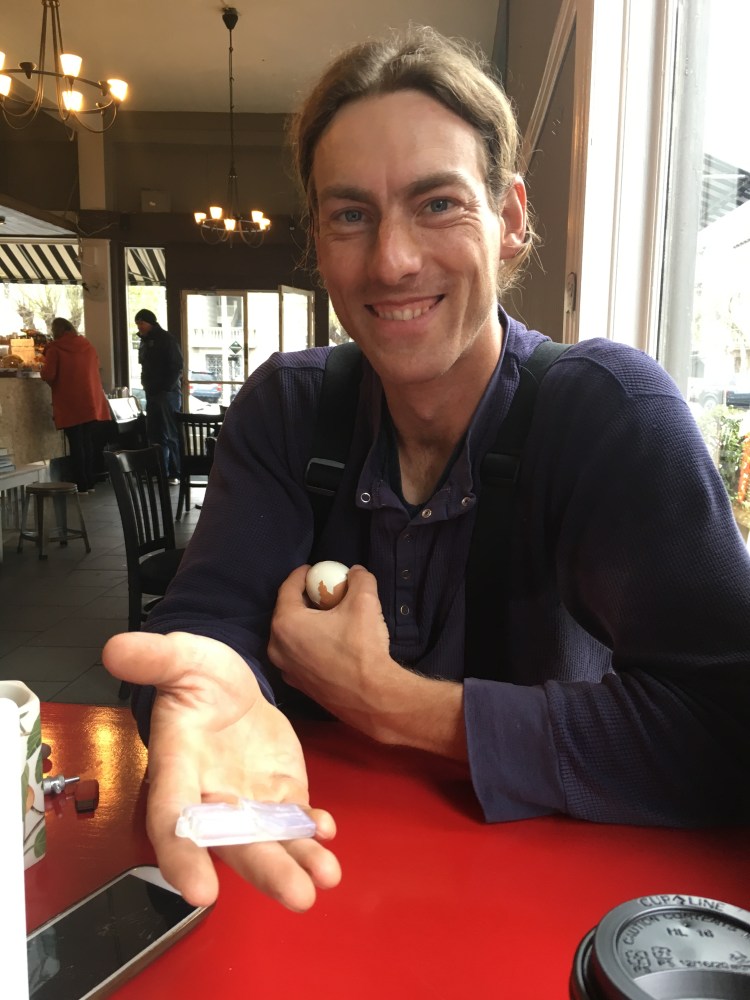
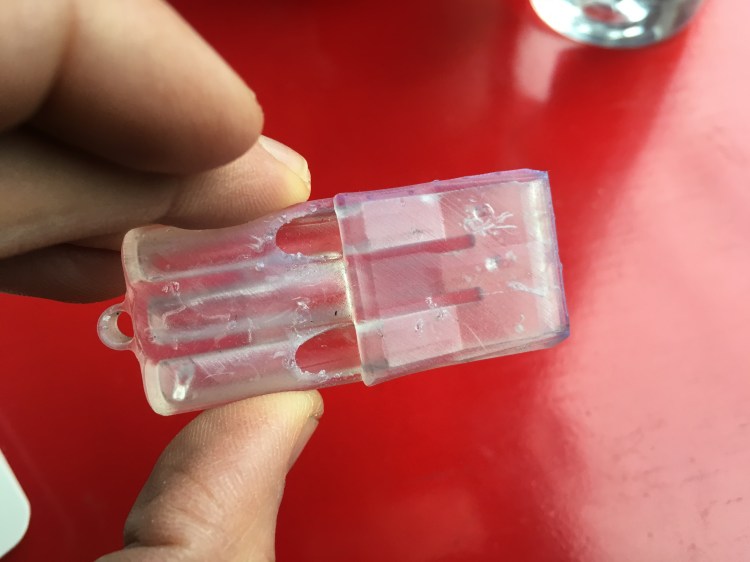
Today’s first for the “one new thing a day for 100 days” new year’s resolution was to blow a 3D printed whistle..it works! Thank you to the maker, Kylo. Pictured below.
The 3D printing process turns a whole object into thousands of tiny little slices, then makes it from the bottom-up, slice by slice. Those tiny layers stick together to form a solid object. Each layer can be very complex, meaning 3D printers can create moving parts like hinges and wheels as part of the same object.
more info from an online article about 3D printing here: (not my words below, this is from http://www.independent.co.uk
What is a 3D printer?
3D printers are a new generation of machines that can make everyday things. They’re remarkable because they can produce different kinds of objects, in different materials, all from the same machine.
A 3D printer can make pretty much anything from ceramic cups to plastic toys, metal machine parts, stoneware vases, fancy chocolate cakes or even (one day soon) human body parts.
They replace traditional factory production lines with a single machine, just like home inkjet printers replaced bottles of ink, a printing press, hot metal type and a drying rack.
Why is it called printing?
If you look closely (with a microscope) at a page of text from your home printer, you’ll see the letters don’t just stain the paper, they’re actually sitting slightly on top of the surface of the page.
In theory, if you printed over that same page a few thousand times, eventually the ink would build up enough layers on top of each other to create a solid 3D model of each letter. That idea of building a physical form out of tiny layers is how the first 3D printers worked.
How do 3D printers work?
You start by designing a 3D object on an ordinary home PC, connect it to a 3D printer, press ‘print’ and then sit back and watch. The process is a bit like making a loaf of sliced bread, but in reverse. Imagine baking each individual slice of bread and then gluing them together into a whole loaf (as opposed to making a whole loaf and then slicing it, like a baker does). That’s basically what a 3D printer does.
The 3D printing process turns a whole object into thousands of tiny little slices, then makes it from the bottom-up, slice by slice. Those tiny layers stick together to form a solid object. Each layer can be very complex, meaning 3D printers can create moving parts like hinges and wheels as part of the same object. You could print a whole bike – handlebars, saddle, frame, wheels, brakes, pedals and chain – ready assembled, without using any tools. It’s just a question of leaving gaps in the right places.
What are the opportunities?
Have you ever broken something, only to find it’s no longer sold and you can’t replace it? 3D printing means you can simply print a new one. That world, where you can make almost anything at home, is very different from the one we live in today. It’s a world that doesn’t need lorries to deliver goods or warehouses to store them in, where nothing is ever out of stock and where there is less waste, packaging and pollution.
It’s also a world where everyday items are made to measure, to your requirements. That means furniture made to fit your home, shoes made to fit your feet, door handles made to fit your hand, meals printed to your tastes at the touch of a button. Even medicines, bones, organs and skin made to treat your injuries.
You can get some of those things now if you’re wealthy, but 3D printing brings affordable, bespoke manufacturing to the masses. If that sounds like pure fantasy, try googling “personalised 3D printed products” and see for yourself. After all, the notion of doing your supermarket shopping on an iPad was like something out of Star Trek 20 years ago.
What are the limitations?
Although buying a 3D printer is much cheaper than setting up a factory, the cost per item you produce is higher, so the economics of 3D printing don’t stack-up against traditional mass production yet. It also can’t match the smooth finish of industrial machines, nor offer the variety of materials or range of sizes available through industrial processes. But, like so many household technologies, the prices will come down and 3D printer capabilities will improve over time.
Is it the next big thing?
Yes, if you’re a product designer or engineer, but for most people, no.
Like all new technologies, the industry hype is a few years ahead of the consumer reality. It’s an emerging technology which means, like home computers or mobile phones, most people will remain sceptical about needing one until everyone has got one… and then we’ll all wonder how we ever managed without them.
Today’s first for the “one new thing a day for 100 days” new years resolution was to scope out Shark Fin Cove just south of Davenport, CA. I had to drive up to San Francisco for work and this item list was conveniently right on the way.. a must see! While it is clearly a gem that one could spend a Sunday afternoon enjoying, a quick ten minute visit is well worth it..
Heading south from the small town of Davenport, on Highway 1 about a mile south of the city, is the turn out for the beach on the RIGHT. If you are paying attention and you still miss it, you can briefly see the fin from the road as you drive past and flip around. If heading north, the turn out is just after Bonny Dune Rd, and obviously will be on your LEFT 😉
The main geologic feature has inspired two interchangeable names: Shark Fin Cove and Shark Tooth Beach. Keep in mind this is not the same spot as Davenport Cove (which sits further north)
Shark Fin Rock
Hundreds, perhaps thousands, of years ago the shark fin was an extension of the mudstone cliff that encloses this beach. Over the years, the force of the crashing waves and whistling winds steadily eroded away the rock in a process called coastal geomorphology.
The rock now stands as we see it today: A small island that catches the light at sunset so compellingly that photographers travel from all over the country to capture its timeless beauty.
Sea Cave
The other magical feature you will see on this exploration is the sea cave. When the ocean has dumped tons of sand onto the beach, a small cave forms on the southeast side of the beach. If you’re lucky, the lapping water will have excavated the cave for you, revealing a hole in the cliff, large enough to walk through. Photographers love to visit the beach during this time because the hole perfectly frames the waves crashing into shark fin rock and the other sea stacks that stand like sentries over the cove.
This cave was also formed as the hydraulic action of the waves slowly eroded away the rock. Hundreds of years from now the cave may open up and form an arch which will eventually collapse and leave yet another free standing island of rock.
Today’s first for the “one new thing a day for 100 days new year’s resolution” was to write out Deepak Chopra’s Seven Spiritual Laws of Success, which I have cut and pasted below. The path of spirituality is a wild one – at times so lucid and at other times quite challenging. I am always open to and grateful for new guidance. Especially for suggestions that encourage me to pause and be more mindful. The more time I spend on this earth the more I know the best way to impact the world is to change my own behavior and change it, of course, for the better. I was fortunate to meet Deepak in the flesh while I was studying at the Esalen Institute in Big Sur, CA last year. He is a remarkable human being who sure does dance his talk… I hope one or two of Chopra’s laws might inspire you to live more aligned with your spirit.
The Seven Keys to Success
In brief, here are the seven laws that can lead you to success:
The Law of Pure Potentiality or The Law of Unity
The source of all creation is pure consciousness or pure potentiality seeking expression from the unmanifest to the manifest.
Our essential nature is one of pure potentiality – infinite spiritual essence, pure joy, creativity, endless possibilities, pure knowledge, infinite silence, perfect balance, invincibility, simplicity and bliss. And by daily practice of silence, meditation, and non-judgment, when we realize that our true Self is one of pure potentiality, we align with the power that manifests everything in the universe and get what we desire.
The Law of Giving
The universe operates through dynamic exchange giving and receiving are different aspects of the flow of energy in the universe. And in our willingness to give that which we seek, we keep the abundance of the universe circulating in our lives. The driving force behind giving and receiving should be happiness – if you want love, love others; if you want joy, give joy to others; if you want all the good things, want the same for others.
The Law of Karma or Cause and Effect
What we sow is what we reap, and when our actions of conscious choice-making bring happiness and success to others, the fruit of our karma (both action and the consequence of that action) is joy and success.
The Law of Least Effort
Nature’s intelligence functions with effortless ease – flowers don’t try to bloom, they bloom; birds don’t try to fly, they fly.
“Least effort is expended when our actions are motivated by love, harmony, and joy”. If we try to seek power, money, or chase happiness for the sake of ego, we waste energy. But contrarily, if these actions are dovetailed with love, our energy multiplies and we can use the surplus energy for anything we want.
The Law of Intention and Desire
“Inherent in every intention and desire is the mechanics for its fulfillment. And when we introduce an intention in our pure potentiality, we put this infinite organizing power to work for us”. At quantum mechanical levels, the universe is our extended body and when we intend, it triggers transformation of energy and information and organizes its own fulfillment.
The Law of Detachment
Relinquish attachment to the result of your action. Attachment is based on fear and insecurity.
Detachment is based on the unquestioning belief in the power of your true Self. “Cars, houses, money, clothes etc. are transitory symbols of your Self…chasing symbols is like settling for the map instead of the territory. It creates anxiety; it ends up making you feel hollow and empty.”
The Law of Dharma or Purpose in Life
“Everyone has a purpose in life…a unique gift to give to others, and when we blend this talent with service to others, we experience the ecstasy of our own spirit, which is the ultimate goal of all goals.” First, we have to discover our true Self. Second, express our special talents. Third, use the gift to serve humanity. Constantly ask the question, how can I help?







 GET FIT WITH KATE